Need Help Designing Your Commercial Kitchen Layout? Email us: bids@jeansrs.com



The Ultimate Guide to Restaurant Convection Ovens: Buying, Sizing & Maintenance
When high-volume commercial kitchens require speed, consistency, and volume, restaurant convection ovens serve as the cornerstone of the line. Whether you are baking delicate pastries, roasting meats, or batch-cooking side dishes, choosing the right convection oven directly impacts your kitchen’s throughput, energy bills, and food quality.
In this buyer’s guide, we will break down how restaurant convection ovens work, the key differences between gas and electric models, size configurations, and critical purchasing factors to ensure you choose the best unit for your food service operation.
What is a Restaurant Convection Oven and How Does It Work?
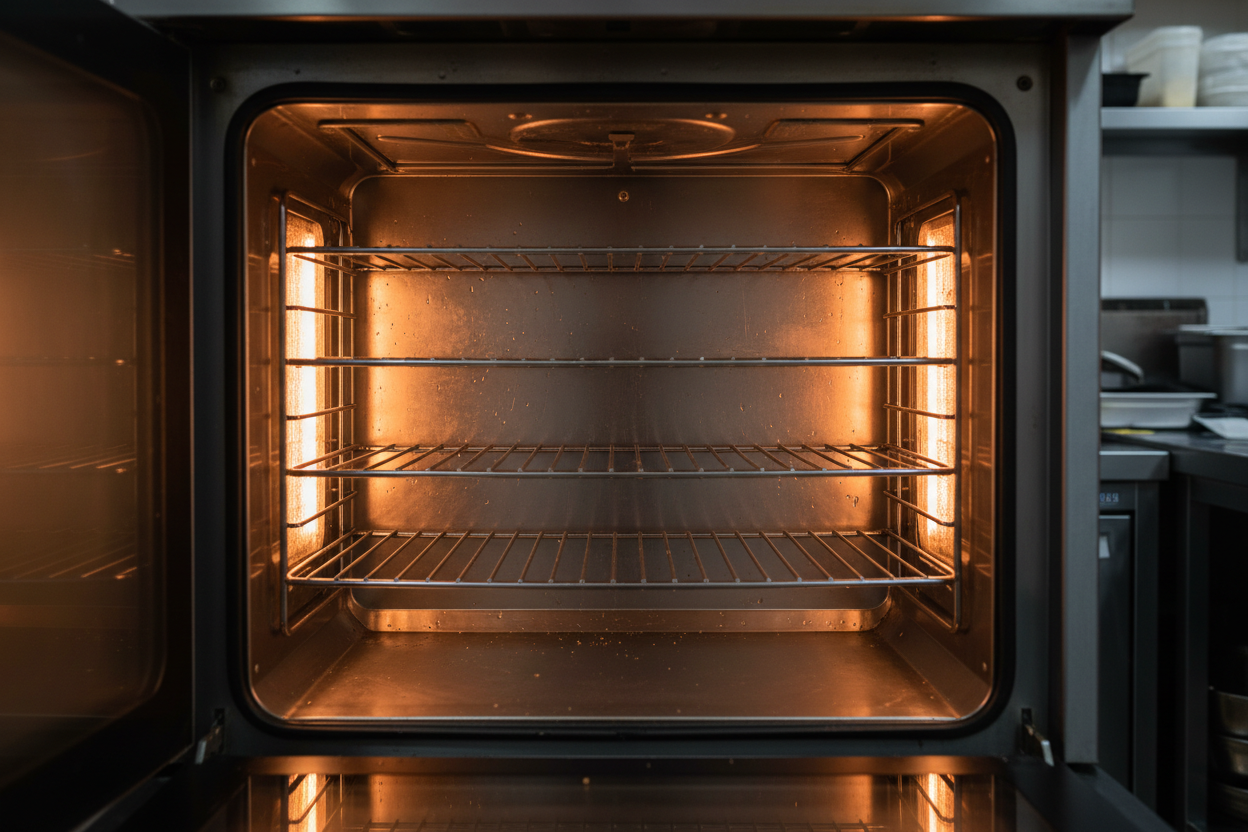
Unlike standard radiant ovens that rely on passive heat transfer, a commercial restaurant convection oven utilizes internal motorized fans to actively circulate hot air throughout the cooking cavity.
This continuous airflow produces several key advantages:
-
Faster Cooking Times: Foods cook up to 25% faster compared to conventional ovens.
-
Lower Temperature Requirements: You can typically lower cooking temperatures by 25°F to 50°F without increasing cook time.
-
Even Heat Distribution: Active airflow eliminates cold spots, ensuring consistent baking and browning across every rack.
-
Enhanced Moisture Retention: Rapid heat transfer seals in juices for meats and creates crisp outer crusts on baked goods.
Electric vs. Gas Restaurant Convection Ovens
The first major choice when selecting a commercial convection oven is the power source. Both gas and electric models have distinct operational strengths depending on your facility's utility setup and menu requirements.
Commercial Gas Convection Ovens
Engineered to operate on either Natural Gas (NG) or Liquid Propane (LP), gas convection ovens are the go-to standard for busy line kitchens and high-volume operations.
-
Pros: Rapid preheating, quick heat recovery after doors open, lower ongoing operational costs in regions with cheap natural gas.
-
Best For: Heavy-duty roasting, high-turnover baking, and high-volume production kitchens.
-
Utility Note: Gas units still require a standard 120V electrical outlet to power the internal fan, digital controls, and ignition systems.
Commercial Electric Convection Ovens
Electric convection ovens rely on dedicated electrical heating elements to heat the cavity. They offer unmatched temperature precision and ease of installation.
-
Pros: Exceptionally stable ambient heat, precise temperature control, simpler installation (no gas lines required).
-
Best For: Bakeries, pastry shops, soufflés, cakes, and precision cooking where delicate items demand uniform heat without drafts.
-
Utility Note: Electric units typically require 208V, 240V, or 480V hardwired connections (1-Phase or 3-Phase). Always consult a licensed electrician before purchasing.
Understanding Sizes and Configurations
Selecting the right physical footprint ensures your kitchen maintains efficient workflow and maximizes available square footage.
Full-Size vs. Half-Size Ovens
Standard Depth vs. Deep (Bakery) Depth
-
Standard Depth: Sheet pans load left-to-right (facing the oven). Perfect for general roasting, baking sheet-pan meals, and standard kitchen prep.
-
Deep Depth (Bakery Depth): The cavity is expanded so standard full-size pans can load front-to-back or side-by-side. This layout alters internal airflow patterns, providing superior heat distribution across dense batches of breads, rolls, and pastries.
Single-Deck vs. Double-Deck Units
If you need to double your cooking capacity without sacrificing valuable kitchen floor space, a double-deck convection oven is the ideal solution. Stacking two independent units allows you to cook two completely different menu items at different temperatures and timers under a single hood footprint.
4 Essential Factors to Consider Before Buying
-
Ventilation Requirements (Local AHJ Codes): Almost all commercial gas convection ovens must be installed underneath a Type I or Type II hood. While some electric units qualify for ventless operation when baking non-grease-laden foods (like bread), always verify local building codes with your Authority Having Jurisdiction (AHJ).
-
Door Configurations: Choose between dependent doors (opening one door automatically opens both with a single handle) or independent doors (allows you to open one side at a time to retain heat).
-
Programmable Controls: Modern electronic or touchscreen controls offer programmable recipes, multi-stage cooking timers, and auto-cool modes—reducing labor costs and training time for line cooks.
-
Energy Efficiency: Look for ENERGY STAR® certified convection ovens. They feature superior cavity insulation, energy-efficient fan motors, and tight door seals, saving hundreds of dollars annually on utility bills.
Frequently Asked Questions (FAQs)
What is the difference between a convection oven and a deck oven?
Convection ovens use active fans to move heat around food, making them versatile for general baking and roasting. Deck ovens use direct conduction heat via heavy stone or metal decks, making them specialized for artisanal hearth breads and high-temp pizzas.
Do commercial convection ovens need a water line?
Standard convection ovens do not require water. However, bakery convection ovens with steam injection or combi-ovens (combination convection/steamer units) do require a dedicated water line and filtration system to prevent limescale buildup.
Upgrade Your Kitchen with Professional Restaurant Convection Ovens
Investing in the right restaurant convection oven transforms kitchen efficiency, lowers food waste, and elevates menu consistency. Explore our full inventory of top-tier commercial gas and electric convection ovens to find the perfect unit engineered for your business requirements.
Restaurant Convection Ovens
-
 ✓ In Stock$29,790.00Unit price /Unavailable
 -
 ✓ In Stock$27,038.44Unit price /Unavailable
 -
 ✓ In Stock$34,805.00Unit price /Unavailable
 -
 ✓ In Stock$34,805.00Unit price /Unavailable
 -
 ⚠ Available to Order$13,672.56Unit price /Unavailable
 -
 ✓ In Stock$24,569.00Unit price /Unavailable
 -
 ⚠ Available to Order$13,910.00Unit price /Unavailable
 -
 ✓ In Stock$6,590.00Unit price /Unavailable
 -
 ✓ In Stock$6,590.00Unit price /Unavailable
 -
 ✓ In Stock$9,314.40Unit price /Unavailable
 -
 ⚠ Available to Order$6,229.00Unit price /Unavailable
 -
 ✓ In Stock$6,229.00Unit price /Unavailable
 -
 ⚠ Available to Order$4,250.00Unit price /Unavailable
 -
 ⚠ Available to Order$4,250.00Unit price /Unavailable
 -
 ⚠ Available to Order$4,250.00Unit price /Unavailable
 -
 ⚠ Available to Order$4,250.00Unit price /Unavailable
 -
 ✓ In Stock$13,598.00Unit price /Unavailable
 -

Used Restaurant Equipment - Lang GCCO-AP Baker-Depth Natural Gas Convection Oven - 60,000 BTU
✓ In Stock$2,400.00Unit price /Unavailable -
 ✓ In Stock$24,849.00Unit price /Unavailable
 -
 ✓ In Stock$12,200.00Unit price /Unavailable


Have A Question About Commercial Convection Ovens?